Stephen LaBerge · Lucid dreaming
Can a dreamer send a signal out of the dream?
That time, that place
Some people realise, in the middle of a dream, that they are dreaming. It is called lucid dreaming. Yet until the 1970s most scientists did not believe it. A dream can only be told after waking, so they took it for a memory made up in the moment of waking.
Why this question
Stephen LaBerge, a graduate student at Stanford, was a frequent lucid dreamer. He seized on one fact Aserinsky had found: during REM sleep the body can barely move, but the eyes still can.
So if, inside the dream, he moved his eyes in a pattern agreed in advance, could the dreaming self send a signal out?
What was found
LaBerge fell asleep in the lab wearing sensors for brain waves and eye movement. When he realised in the dream that he was dreaming, he moved his eyes widely left and right a few times, as agreed.
On the chart, in the middle of REM sleep, a clear eye signal stood out. He was plainly asleep, and at the same time he had kept his promise like someone awake. It was a signal sent from inside the dream to the outside.
In fact Keith Hearne at the University of Hull had succeeded with the same method a few years earlier, but it stayed in his doctoral thesis and was hardly known.
Knowing you are dreaming while you dream is a memory invented on waking
An eye-movement signal, agreed in advance, appearing in the middle of a REM-sleep record
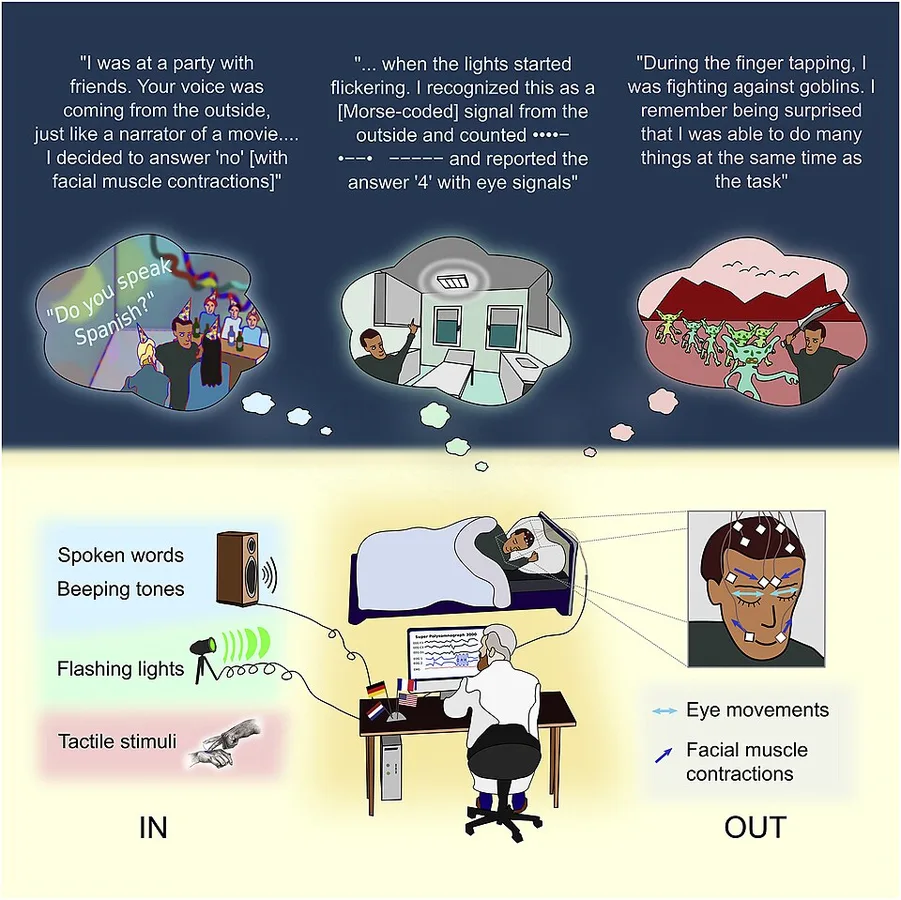
Science rejected the paper when a reviewer refused to believe it; the result appeared in another journal in 1981. Using the signal to time dreams, counting to ten took about as long as awake, and physical actions took longer, not shorter. In 2021 teams in four countries put arithmetic questions to dreamers and received answers by eye signal