Aserinsky · Kleitman · REM sleep
Why do a sleeper's eyes move?
That time, that place
Eugene Aserinsky, a graduate student at the University of Chicago, was short of money and working out of a lab in a run-down building, with a wife and a small son. His supervisor, Nathaniel Kleitman, had spent his life studying sleep, but at the time sleep was thought of as a quiet stretch when the brain switched off and rested.
Why this question
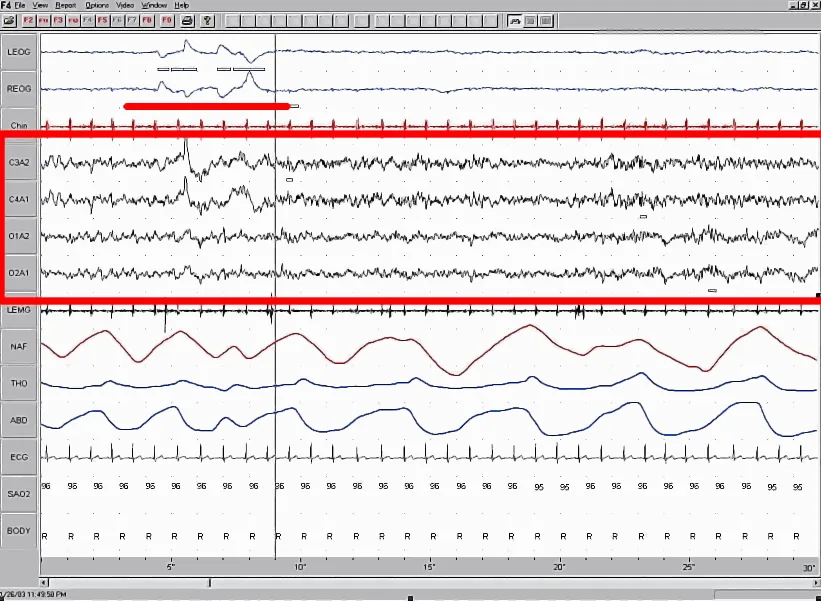
Aserinsky noticed eyeballs moving under a sleeper's lids and decided to record the movement all night. He fixed the electrodes of a brain-wave recorder around the eyes as well — the machine that measured the waves Berger had first caught.
The first person he recorded all night was his eight-year-old son, Armond. The boy slept on a cot in the lab while his father watched the pens trace their lines till morning.
What was found
Through the night, eyes that had been still would suddenly, both together, flick rapidly from side to side — again and again. At those times the brain waves were as busy as when awake.
Wake someone at such a moment and ask, and most said they had been dreaming. Wake them while the eyes were still, and they seldom remembered a dream.
Sleep was not switched off. Hidden inside it were stretches when the brain grew busy again. These stretches are called rapid-eye-movement sleep — REM sleep.
Sleep is an even, quiet time when the brain switches off and rests
Rapid eye movements recurring through every night, and the dreams reported by people woken during them
A few years later Kleitman and William Dement showed that REM sleep returns roughly every ninety minutes through the night. Woken five or fifteen minutes into REM and asked to choose how long the dream had lasted, most sleepers chose right. Dream time had run at nearly the same pace as time outside