Middle school year 2 · fifth unit
Plants and Energy
A plant eats nothing, yet it grows, because it makes its own food from light, water and air. Find out what goes on in a leaf by shining light, moving the sun and making wind.
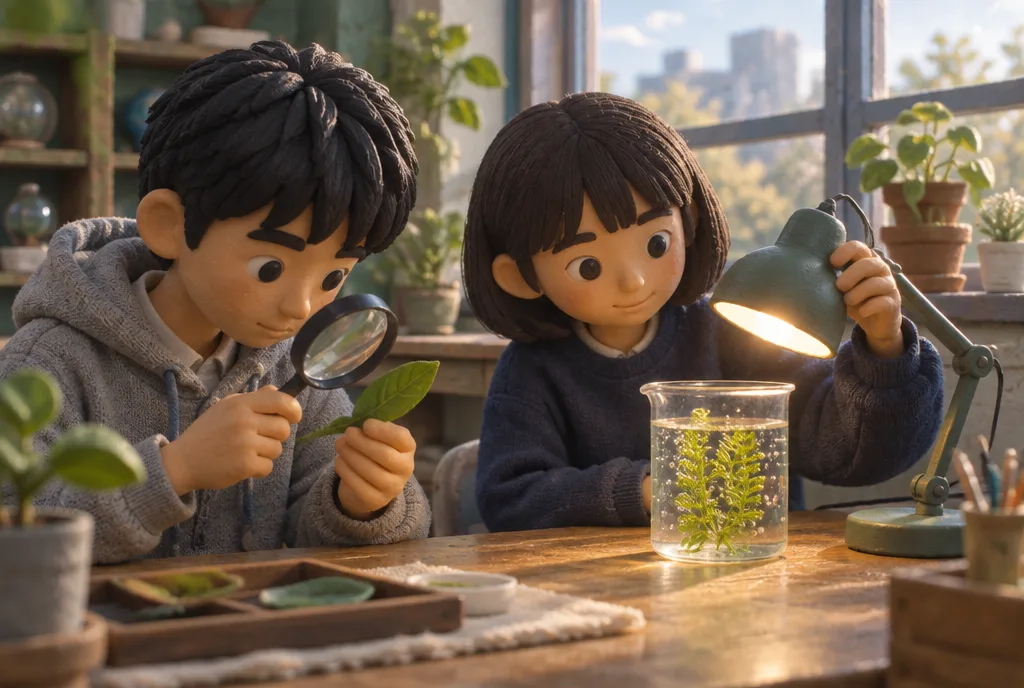
Shine a light and bubbles rise from the pondweed
A board to adjustDo more come with stronger light? Without limit? Take the lamp and drag it toward the plant.
Do plants breathe too?
A board to adjustThe gases passing through a leaf differ by day and by night. Take the sun and drag it down.
The water in the vase has gone down in a few days
A board to arrangeWhere did the water the flowers drank go? Drag the lamp, the fan and the plastic bag to the twig.
What to take away from this unit
- Photosynthesis is a plant using light energy to turn water and carbon dioxide into glucose and oxygen. It happens in the chloroplasts of leaf cells. More in the glossary
- Photosynthesis is brisker with stronger light, more carbon dioxide and a suitable temperature. Past a certain point, though, it rises no further.
- Respiration is breaking down glucose with oxygen to get the energy to live. Plants respire all the time too. By day photosynthesis is faster, so oxygen comes out; by night there is only respiration, so carbon dioxide comes out.
- Transpiration is water leaving as vapour through the stomata of the leaves. It is brisker in strong light, warmth, wind and dry air. It provides the pull that lifts water from root to leaf.
- Glucose made by photosynthesis is stored for a while as starch, then at night is turned into sugar and carried through the phloem to the whole plant. What is left over is stored in roots, stems, fruits and seeds.